What drew you to the world of bids and proposals?
I’m not sure many people actively set out to build a career in proposal and bid management. Most of us seem to find our way into it unintentionally. But what has kept me in this field is the genuine opportunity to make a meaningful impact. I love being able to streamline complex processes, make things easier for both teams and the business, and help drive real results.
I also discovered that this work aligns perfectly with my strengths and personality. I enjoy bringing structure to fast-moving environments, creating clarity where there is chaos, and keeping momentum going. While bidding is often described as stressful, I don’t believe it has to be. With the right approach and a collaborative mindset, it can be both productive and enjoyable, even fun.
Can you tell me about your career journey?
I began my career after university in an administrative role with the NHS, working in patient support. It was a blend of admin and front line problem solving, and I discovered how much I enjoyed connecting with people, understanding their real needs, and finding practical solutions, even when the initial request wasn’t always the true issue. That experience helped me develop strong intuition for “connecting the dots,” which later proved invaluable in bids.
I eventually interviewed for what I believed was a CAD role, drawing on the skills I’d gained during my interior architecture degree. Halfway through the interview, the panel asked what I thought I was there for and it turned out they were looking for a graduate work winning consultant. Although I had never heard of the term “work winning” before, we leaned into the conversation, and I joined AECOM on their Strategic Highways team.
I spent about six years at AECOM, progressing from graduate work winning consultant to assistant bid manager and then bid manager. I also had the chance to relocate and work across different business areas. First in Birmingham on major transportation bids, then in St. Albans supporting the Buildings & Places team, and eventually within a central major bids group for the Europe region. Moving around the business and working with diverse teams, partners, and disciplines gave me a deep appreciation for how varied the role of a bid manager can be.
After several years, I felt ready to grow again. I’ve always been passionate about learning, so I pursued a master’s degree in leadership and management via distance learning. It broadened my perspective and gave me the opportunity to reflect on my own development. My dissertation focused on how mentoring can support the retention of women in STEM, a topic that gave me insights I still draw on today.
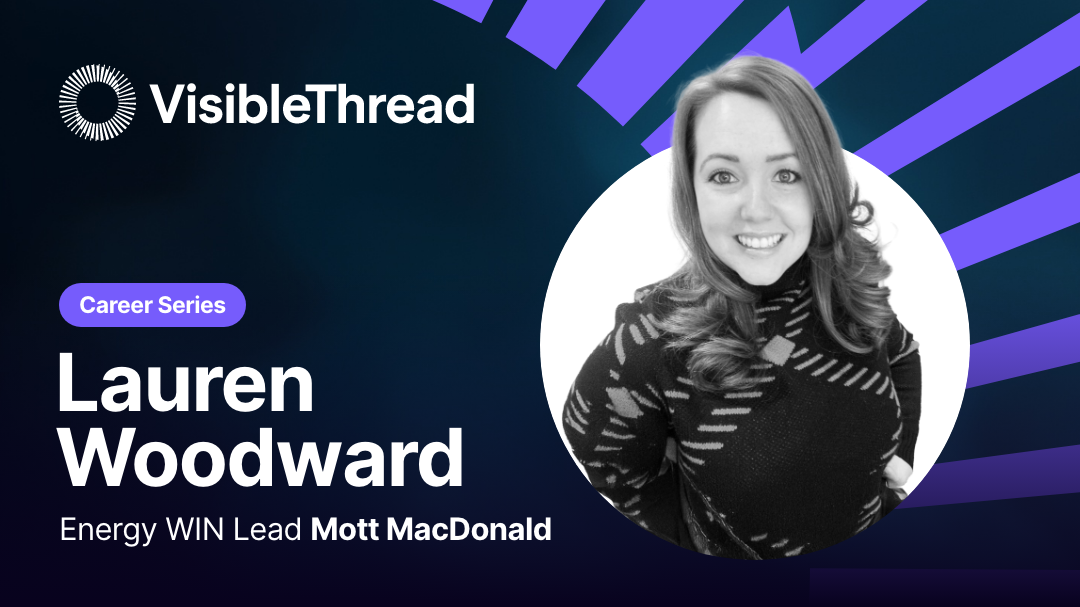
Once I completed my degree, I had the urge for more. A former colleague reached out and encouraged me to explore opportunities at Mott MacDonald, and that led to my current role. I’m now the Win Lead for the Energy unit, stepping into both the position and line management responsibilities at the same time, which was a rewarding learning curve.
Since then, I’ve been fortunate to be recognized as one of APMP’s 40 Under 40 in 2023, and the regional team I’m part of won Bid & Proposal Team of the Year. I feel very proud to be part of such a strong, supportive, and highly professional community.
What’s the most significant proposal or capture effort you’ve led, and what made it successful?
One of the biggest factors in any successful proposal or capture effort is the people behind it. Whenever I meet a new bid team, I often ask about their bidding experience as an icebreaker, because it quickly surfaces how different teams can approach the process. But my answer is always the same: people ultimately make or break a bid.
The most significant efforts I’ve led have succeeded because we had the right team. People who were willing to get involved, try new approaches, follow best practice, and challenge ideas constructively. A culture of openness and collaboration is incredibly powerful in bids.
Equally important is a deep understanding of the client and the opportunity. Knowing why we’re pursuing something, why it matters to the client, why it matters to our business, and why it’s worth the investment of time and energy creates real alignment and focus. You can always feel that difference in more strategic, well-positioned proposals compared to the “business as usual” bids that run on autopilot.
For me, the most successful efforts are the ones where the team is fully engaged, the client drivers are crystal clear, and we’ve taken the time to position ourselves thoughtfully. That combination is what consistently elevates a bid from compliant to compelling.
What’s one misconception about the proposal/BD profession you’d like to correct?
One misconception I’d like to correct is the idea that everyone in proposal or BD roles does the same thing. In reality, our profession is incredibly diverse. Each person brings a unique mix of strengths, experiences, and interests; and that variety is what makes teams effective.
I’m very focused on helping my team understand and develop their own USP, because while we all share a core set of bidding skills, the real value comes from the differences we each bring. Some people excel in high pressure major pursuits, others in strategic positioning, storytelling, client insight, or process discipline. No two bids are the same, and naturally, no two bid professionals are the same either.
People ultimately make or break a bid.
How do you balance the technical requirements of a proposal with telling a compelling story?
Balancing technical requirements with a compelling narrative really comes back to best practice. APMP gives us a strong foundation for a reason. We love a plan, list, and matrix to really understand the requirements and the main points of the Proposal response first. A solid structure is essential.
Once the fundamentals are clear, that’s when storytelling comes in. We weave in experience, benefits, and differentiators in a way that feels natural and reinforces the technical response, rather than competing with it. The story should enhance the answer, not overwhelm it.
What’s your approach when facing an extremely tight proposal deadline?
When facing an extremely tight proposal deadline, organization is absolutely key. I start with a clear, up to date plan – what I call a bid book, that evolves throughout the process rather than being static at the start. This ensures nothing slips through the cracks.
Frequent and tailored communication is equally important. Depending on the timeline and the team involved, check-ins may need to be more or less frequent, but everyone should always know the current status.
Clarity is critical: who is responsible for what, when it needs to be completed, and how it fits into the overall schedule. Transparency across the team helps prevent misunderstandings. I also make sure to anticipate potential challenges and having backup plans in place.
How has the bid and proposal landscape changed since you started in this field?
I’d like to highlight three key changes I’ve observed in the bid and proposal landscape since I started.
First, client expectations have evolved significantly. We’re seeing much shorter turnaround times, more complex bid requests, and an increasing number of stakeholders to manage.
Second, the shift from face to face interaction to digital collaboration has been significant, particularly post COVID. Tools like Teams and other digital platforms have transformed how we work, making remote collaboration far more effective. That said, there are still critical points in the bid lifecycle such as kickoffs, strategy sessions, and reviews where in person interaction adds immense value.
Third, there’s a growing focus on behaviors and collaboration. Clients increasingly include behavioral assessments and interviews to understand how teams will work together over the long term, not just how they score technically or commercially. I find coaching teams for these assessments particularly rewarding, as it’s an opportunity to demonstrate not just capability, but the ability to collaborate and add lasting value.
Overall, the landscape has become faster, more complex, and more holistic, requiring bid professionals to be both strategic and adaptable.
Success in this field comes from combining technical skills, emotional intelligence, meticulous attention to detail, and a continuous learning mindset.
What skills do you believe are most crucial for success in bed/proposal management today?
There are a few core skills that I believe are crucial for success in bid and proposal management. On the more obvious side, organization, structured planning, APMP best practices, capture planning, and strong writing skills are essential and fortunately, these can be taught.
Where I think the industry sometimes falls short is emphasizing soft skills. Negotiation, resilience, working under pressure, prioritization, and the ability to understand and read people are just as critical. Much of what makes a bid successful comes down to the people you’re working with, so being able to understand how individuals respond, how to motivate them, and how to keep the team focused and on track is invaluable.
Attention to detail is another non-negotiable skill. It’s hard to teach, and it requires patience and an eye for precision.
Finally, a desire to continuously learn and grow is vital. The bid landscape is increasingly complex, and we face more competition than ever, so staying ahead means constantly improving processes, learning from past experiences, and sharing knowledge within your team and the wider professional community. We regularly reflect on lessons learned, share insights in team calls, and engage in APMP community sessions, which allows us to build collective intelligence and apply it to future opportunities.
In short, success in this field comes from combining technical skills, emotional intelligence, meticulous attention to detail, and a continuous learning mindset.
Can you share a time when you had to pivot your strategy mid-process? What happened?
We had a bid where halfway through the process, we learned more about the behavioral workshops and the specific requirements for those who needed to be interviewed. This required us to adjust the key delivery personnel in the resourcing section of the bid, which also meant changing some of our reviewers and refocusing their efforts. Essentially, we had to pivot both the bid team and the delivery team mid-cycle.
This required taking a step back to ensure our win themes were still aligned and reviewing our answer planning to confirm that everything we’d agreed to include still made sense in the new context. Fortunately, our strategy and existing content were strong enough that we could make these adjustments without losing momentum. There was some rewriting involved, but the process remained structured, and we were ultimately very pleased with the scores we received on those sections.
This experience reinforced the importance of flexibility, clear communication, and having a robust underlying strategy that allows a team to adapt when requirements shift.
What technological tools or software have been game changers for your proposal development process?
One of the most impactful tools for proposal development is a well-structured library. At my current organization, we’ve gone through multiple iterations to create a library that serves not just the bid team, but also technical SMEs and internal stakeholders. A strong library ensures everyone can access past responses, training materials, templates, and other essential resources in one central location reducing the need to chase multiple people for information and streamlining the bid process considerably.
Another game changer has been Microsoft Teams. I remember when we first adopted it, the team felt it was an extra burden on top of desk phones, mobile phones, and laptops. Today, it’s hard to imagine functioning without it. Teams enables seamless collaboration, with multiple participants, breakout rooms, and instant communication, which has become essential especially when face to face interaction isn’t possible.
Together, a robust library and effective digital collaboration tools have transformed the way we manage proposals, making our processes more efficient, connected, and responsive.
How do you build and maintain relationships with technical subject matter experts who contribute to proposals?
If I had to sum it up in one word, it would be authenticity. In my studies in leadership and management, the importance of authenticity really stood out. I don’t have a technical background, and I’m honest about that. I don’t pretend to understand everything SMEs are discussing, which actually works in my favor. It allows me to ask simple, clarifying questions that help bring complex concepts back to a level everyone can engage with.
At the same time, I bring my expertise in bid best practice and strategy to guide discussions and help SMEs see how their input fits into the bigger picture. When I took on this role, I had to build trust and credibility with a number of stakeholders, and that’s something I continue to nurture every day.
Being authentic, knowing and acknowledging what I’m good at and where I rely on others creates a foundation of mutual respect. It allows us to work together effectively, leverage each other’s strengths, and ultimately deliver proposals that reflect both technical excellence and strategic clarity.
What’s your strategy for gathering competitive intelligence during the capture phase?
At Mott MacDonald, we follow a structured process for capture planning, supported by a robust template. One of the key principles I’ve found is that competitive intelligence is best gathered from a team rather than a single individual. A strong account lead is invaluable. They know the client, the competitors, and the broader context, but it’s equally important to engage a wider group who may have insights the account lead isn’t aware of.
In practice, this means holding multi-unit engagement sessions. For example, while I work in the energy sector, we might invite stakeholders from transportation or other sectors to share their perspectives on the client, competitors, and challenges they’re seeing. This creates a more holistic, well rounded understanding of the market landscape.
From there, we focus on what we truly bring to the table and assess it through the client’s lens. Are we the best positioned to meet their needs? We complement this with classic tools like SWOT analysis, but always with a practical, client focused perspective. This combination of structured processes, diverse input, and critical analysis is what makes our competitive intelligence during the capture phase effective.
Being authentic, knowing and acknowledging what I’m good at and where I rely on others creates a foundation of mutual respect. It allows us to work together effectively, leverage each other’s strengths, and ultimately deliver proposals that reflect both technical excellence and strategic clarity.
What advice would you give to someone looking to transition into business development or proposal management?
The most important advice I would give to someone transitioning into business development or proposal/bid management is to start with the basics. Strong, organized bid management using tools, templates, and structured processes is the foundation for success. Shadow experienced colleagues, get hands on, and immerse yourself in the practical aspects of the role.
Equally important is understanding the “why” behind what we do. Why are we pursuing this opportunity? Why this client? What does it take to win, and why is it important to the business? Asking these questions helps build a bigger picture and ensures that every action aligns with the client’s needs and expectations.
Ultimately, proposals aren’t just about following the process. They’re about understanding the client’s perspective and ensuring we’re the right partner to deliver what they need. Anyone can learn the mechanics of bid management, but developing insight into the client and the strategic context is what turns a competent bid into a winning one.
What role does mentorship play in developing new proposal professionals?
Mentorship plays a huge role in developing new proposal professionals. I currently lead a team of about a dozen people, and a significant part of my role involves guiding them through challenges whether that’s problem solving specific bid issues or navigating frustrations within the team. Those moments, where I can help someone approach a problem differently and see tangible progress, are some of the most fulfilling aspects of my work.
Mentoring also exposes both mentor and mentee to a broader perspective. Being involved in a variety of bids, contexts, and approaches helps new professionals understand the bigger picture, rather than being limited to the same routine work day in and day out. A mentor can help build that awareness, offering insight into what else is happening across the business, what opportunities exist, and how to develop skills to contribute more broadly.
Mentorship accelerates learning, builds confidence, and helps new professionals navigate the complexity and variety inherent in bid and proposal management.
I think it’s important to remember that mentorship is not only useful for new professionals, but anyone who is going through or approaching a change to their career, including promotion or returning to work after a significant absence.
How do you measure success beyond win rates in your role?
Success in my role isn’t measured solely by win rates. One key indicator is improvement whether that’s increasing technical scores, enhancing the quality of writing, or refining our overall approach. Even in bids we don’t win, seeing measurable progress is a clear sign that our efforts are making an impact.
Another important measure is internal influence. Winning over stakeholders, especially those who may initially be skeptical of certain processes like answer planning, is a significant achievement. When they see the value of best practice approaches and recognize the difference it makes, that’s a meaningful success.
I also consider the quality of lessons learned and team experience. A bid where the process runs smoothly, insights are captured, and the team feels supported, even under pressure, is a strong indicator of success. Creating an environment of psychological safety, reducing stress, and fostering enjoyment in the work allows us to challenge ourselves, learn, and continually improve.
Ultimately, success is about progress, impact, and the development of both the team and our approach, not just the final win.
What’s been your most valuable lesson from a proposal that didn’t win?
A few years ago, we worked on a proposal that was really important to the business. The account lead had a strong relationship with the client, and we felt confident in our story, win themes, and overall strength compared to the competition. We truly believed in the bid we submitted.
However, one of our competitors submitted a very low priced offer as part of a longer term strategy to break into a new client and region, something we hadn’t anticipated. That experience taught me a critical lesson: no matter how strong your internal preparation and strategy is, you must always maintain awareness of the external landscape.
It’s essential to understand not only who your competitors are, but also who isn’t visible in the market and what strategies they might be pursuing. You can never take the outcome for granted; surprises happen and anticipating them as much as possible is key to building a resilient capture strategy.
No matter how strong your strategy is, you can never take the outcome for granted. The external landscape can always shift.
How do you maintain work-life balance in a field known for intense deadlines and high pressure?
Maintaining work life balance in a field with intense deadlines and high pressure has been a big learning curve for me, particularly given how much I travel. My team is spread out, so I often spend two to three days a week traveling, with some trips taking several hours each way. That can make for long, exhausting days, so I’ve had to be deliberate about building structure and balance into my schedule.
One of the key ways I do that is through dance classes. I’ve been dancing since I was a child, and I continue with contemporary, modern, and stage style classes. Having set class times helps me build structure into my week. I make it a priority to be home for those evenings. I plan classes in two week blocks, which gives me the flexibility to adjust around particularly busy periods, ensuring I still take time for myself without compromising deadlines.
I also approach work flexibly. On some days, I’m strict about finishing at a set time; on others, I work later when it’s quiet and I can be highly productive. I recently joined a new gym and sometimes take longer lunch breaks to join their classes, then adjust my evening hours accordingly. I’ve also deliberately disconnected work emails and Teams from my phone, which allows me to truly switch off when I’m offline, and I encourage my team to do the same.
Lastly, I find that activities enhance skills I use professionally. The focus, memory, and confidence required in choreography have directly improved my ability to present and perform under pressure at work. These practices engage different parts of the brain, refresh my thinking, and ultimately help me manage the intensity of the role more effectively.
In short, balance comes from planning, flexibility, intentional downtime, and activities that recharge both the mind and body.
If you could change one thing about the procurement/proposal process industry wide, what would it be?
AI is definitely the biggest trend shaping the future of business development and proposal management. At Mott MacDonald, we’re still in the early stages of trialling AI tools, but I’m really excited about the potential. AI has the ability to automate repetitive, administrative, or library-related tasks that can often bog teams down. By offloading some of this work, it frees up time for more strategic thinking such as crafting compelling responses, refining win themes, and positioning ourselves more effectively in the market.
Another area where AI can help is internal governance. Many of the process driven tasks that are essential, but time consuming could be streamlined, reducing friction and allowing teams to focus on higher-value activities.
I think there’s still a lot of apprehension in bid management about AI. Concerns about whether it might replace roles, but I see it as an opportunity to enhance our work rather than replace it. Over the next five years, I expect our relationship with AI to evolve significantly, transforming how we work, how we collaborate, and ultimately, how we win business. Embracing it strategically will be key to staying ahead.
Success is about progress, impact, and the development of both the team and our approach, not just the final win.